Comparative cooperative law, made usable

Turn cooperative law into comparative legal intelligence.

Organizations often rely on scattered documents, manual research, and informal knowledge to compare cooperative law across jurisdictions.
Co-op Atlas turns that fragmented effort into structured, citation-backed knowledge you can compare, verify, and carry forward.

Built around the recurring questions people ask when working with cooperative law.

Clear comparisons
Clear findings people can use and revisit.
Sources you can verify
Trace answers back to cited legal text.
Global Edition world map view showing cooperative law coverage by region.
Global Edition: international discovery, comparison, and source verification
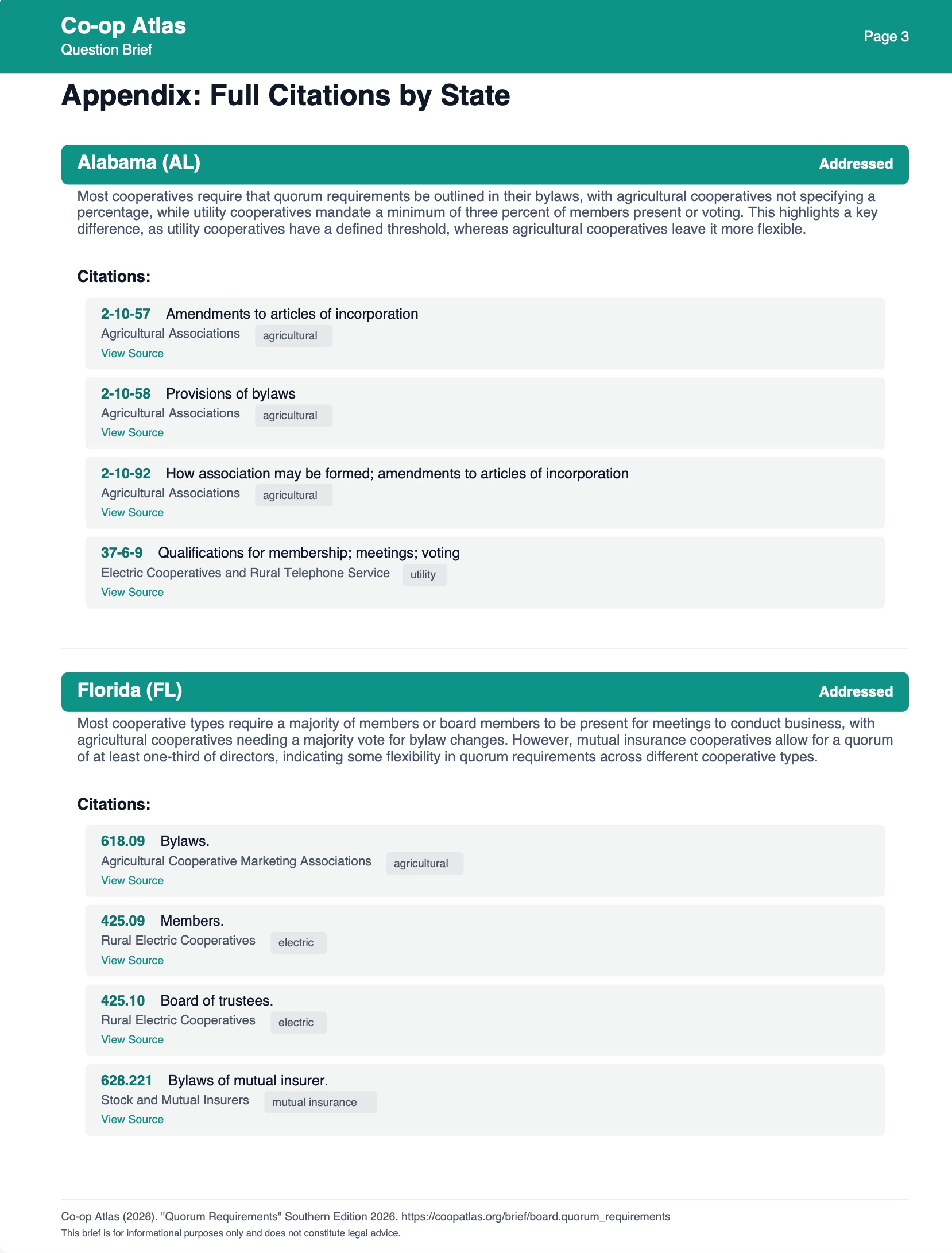
U.S. Southern Edition brief-style view summarizing a cooperative law question.
U.S. Southern Edition: published brief output

What you get

A structured answer, not just a pile of legal documents.

The output is not just a one-time answer. It is a structured comparison that captures the question, shows how jurisdictions differ, and keeps the legal basis reviewable.

Here is one example of how a recurring legal question can be structured and answered.

Actual output example

Board quorum requirements, answered in a publication-ready brief.

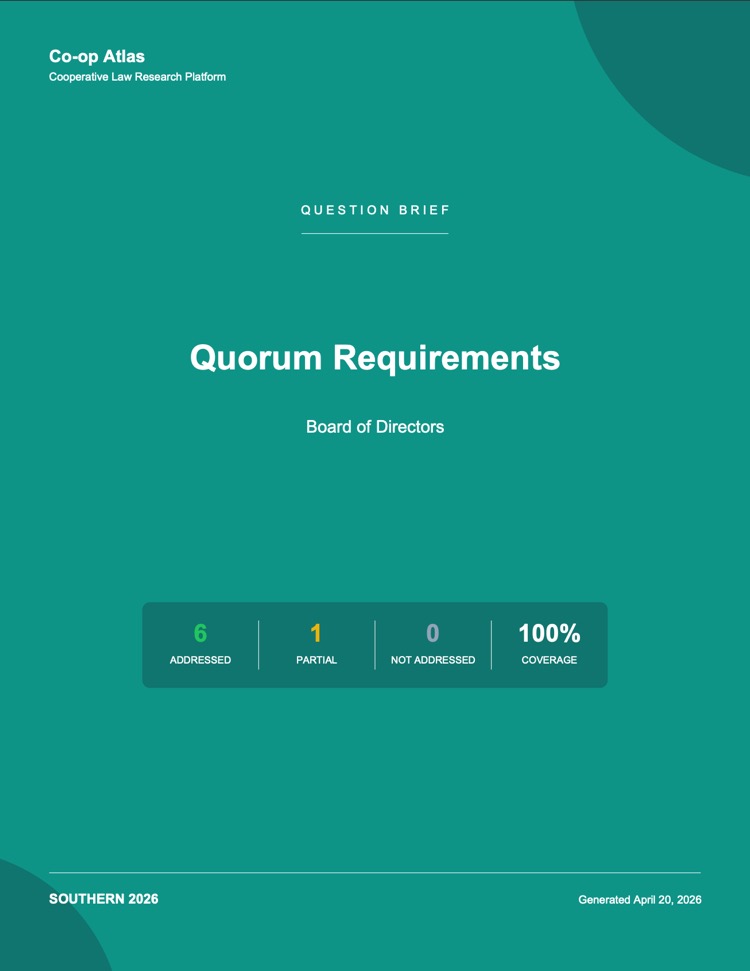
The actual U.S. Southern Edition brief Quorum Requirements: Board of Directors.

7 states 6 addressed 1 partial 100% coverage

Select a state to see how the brief replaces repeated legal research with a concise, cited answer.

Georgia

Addressed

Bylaws often control quorum. Credit unions require a majority of directors, and utility cooperatives add a 10 percent voting-member threshold.

Cited provisions: 7-1-656, 46-3-296

Louisiana

Addressed

Several cooperative types leave quorum flexible through bylaws, while educational and electric cooperatives set a five percent member quorum unless adjusted.

Cited provisions: 17:2809, 12:408

Texas

Addressed

Most cooperative types leave board quorum to the bylaws, while credit unions apply a more specific standard for amendment actions.

Cited provisions: 251.053, 52.052, 122.011
Open Full Question Brief

What Co-op Atlas is

Built for recurring legal questions.

Co-op Atlas turns recurring cooperative law questions into clear answers across jurisdictions.

It brings discovery, comparison, source verification, and structured outputs into one working flow.

Co-op Atlas helps teams move from scattered legal materials to a more usable, structured body of cooperative law that can support research, shared knowledge, and real-world cooperative work.

Co-op Atlas

A public-interest initiative for turning cooperative law into usable answers, comparisons, and briefs.

How it works

From legal source material to verifiable answers.

From primary legal sources to structured, comparable answers that teams can check, share, and use again.

The workflow below shows one way to move from legal sources to structured answers. The U.S. Southern Edition provides the example shown here, while the Global Edition supports broader legal discovery across jurisdictions with source evidence kept close to the answer.

Outcome

Clear, citation-backed answers

Findings teams can check, share, and use again.

1. Find relevant laws

Search the legal collection by region, country, type, and language.

2. Frame the question

Define the recurring legal question clearly.

3. See differences clearly

Compare jurisdictions side by side.

4. Verify the source

Review cited passages against the original legal text.

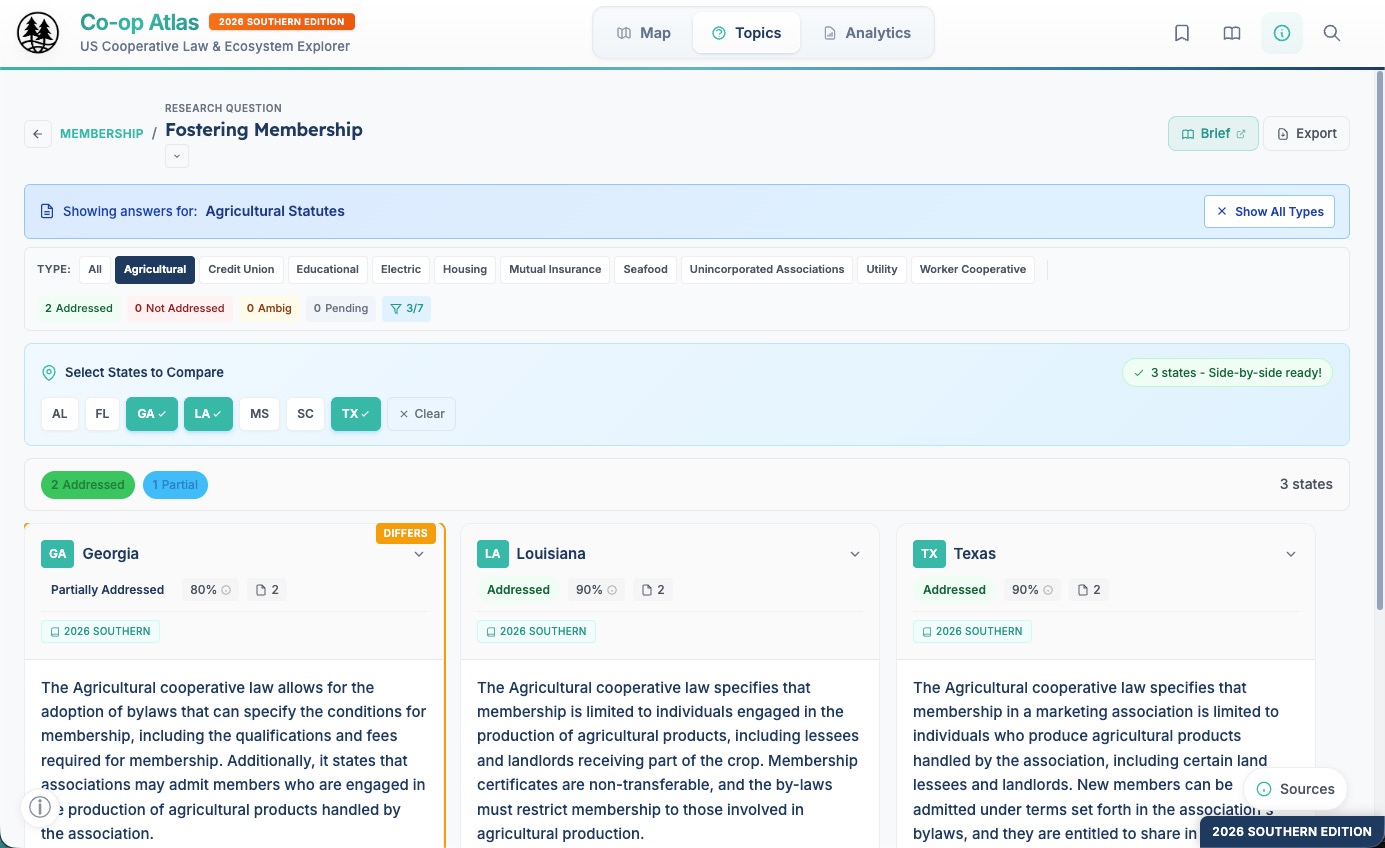
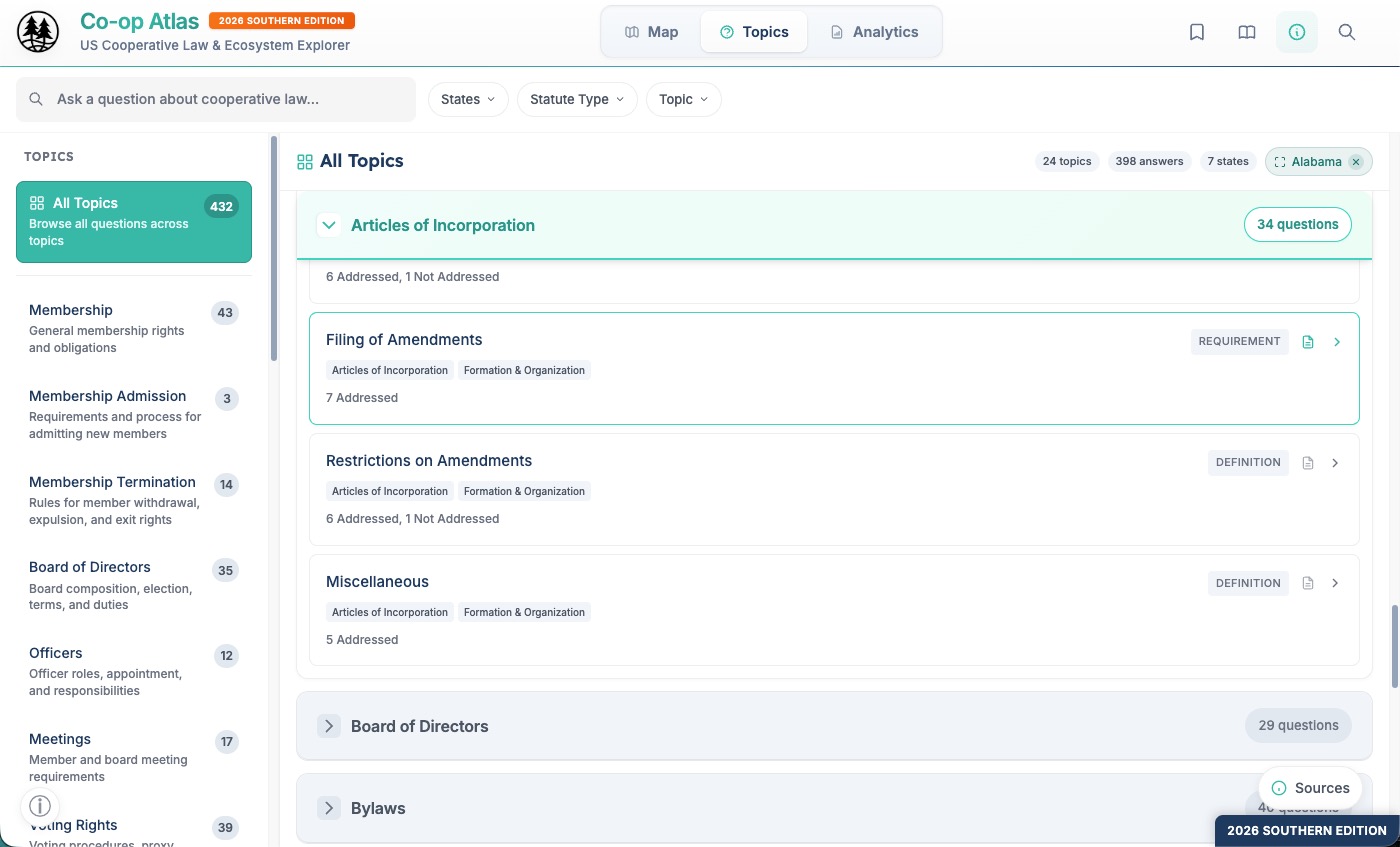
U.S. Southern Edition topics view for browsing structured legal questions.
Browse structured legal questions
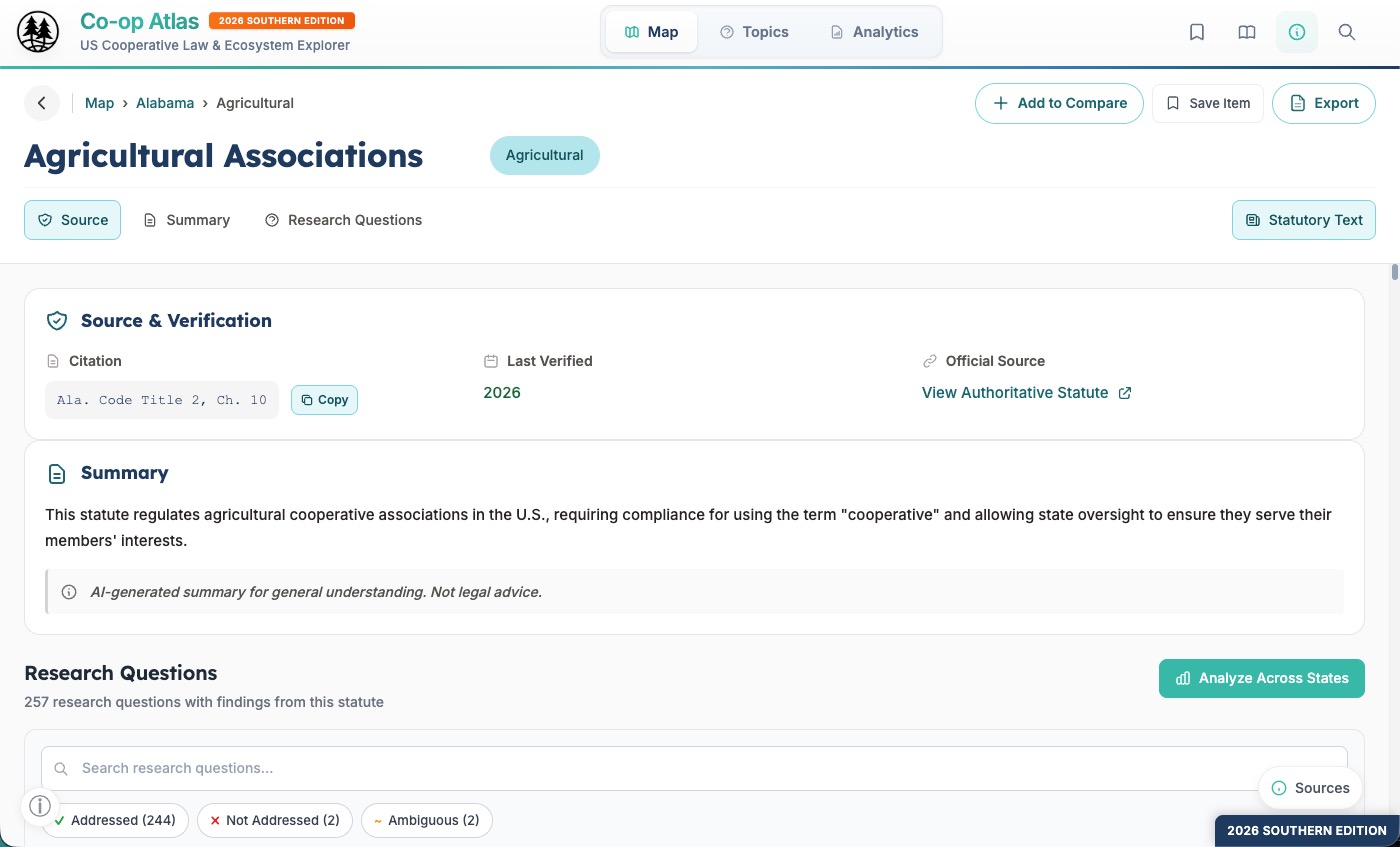
U.S. Southern Edition research view comparing answers across states.
Compare answers across states
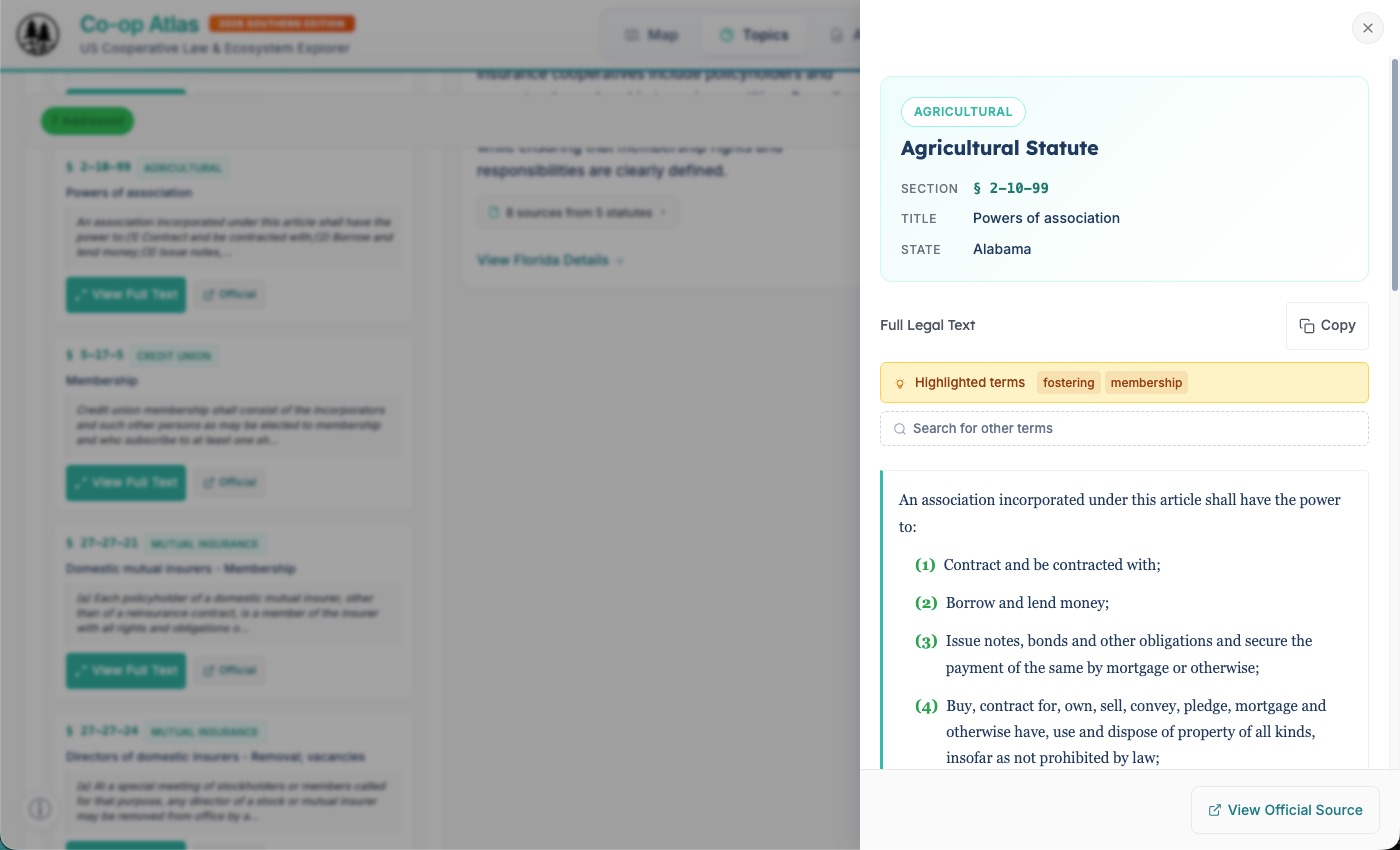
U.S. Southern Edition full legal text view connecting an answer to source law.
Move from answer to source law
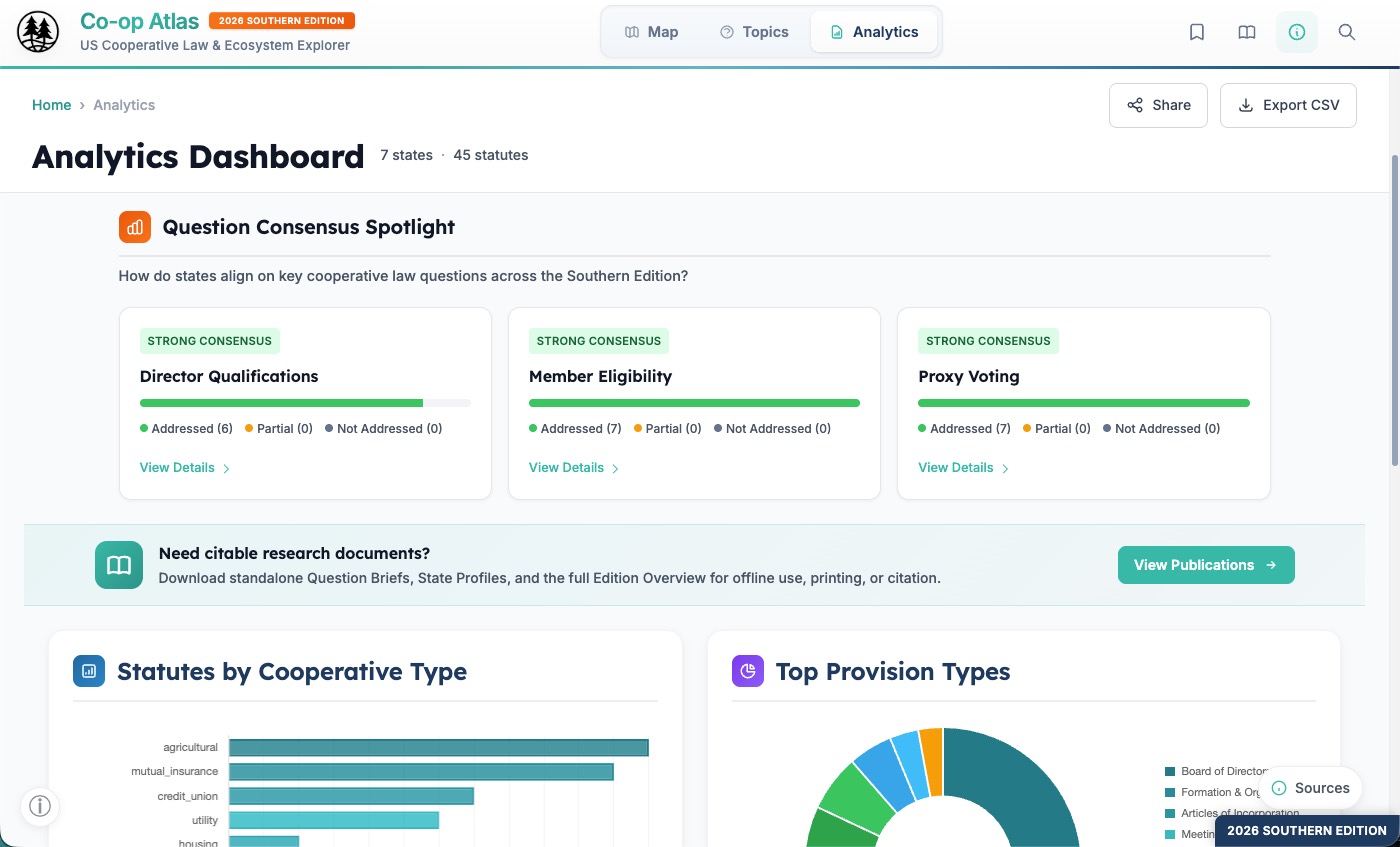
U.S. Southern Edition analytics dashboard showing structured patterns across the dataset.
See structured patterns across the dataset

Editions

Two editions under one initiative.

Two ways to work with cooperative law: broad discovery and focused comparison.

Global Edition

Broad international discovery with source evidence built in.

Global Edition supports international discovery across jurisdictions, documents, and legal sources, then keeps the underlying evidence close enough to inspect.

It helps surface relevant laws and legal patterns while letting users move back to cited passages, plain text, and original source documents.

  • Built around a distinct global legal collection
  • Designed for international discovery and comparison
  • Includes search, map views, document comparison, and source viewing
  • Supports evidence review with cited passages, document search, and original PDFs
Explore Global Edition

U.S. Southern Edition

A published, citation-backed edition across seven Southern states.

U.S. Southern Edition applies that approach within a seven-state regional dataset, using question-based comparison and publication-ready outputs.

Short visual overview of the U.S. Southern Edition

  • Built around a verified seven-state legal dataset
  • Organized around recurring legal questions
  • Produces comparisons, structured outputs, and briefs
  • Shows one applied version of the system in practice
Explore U.S. Southern Edition

Why it matters

Recurring legal questions need better answers, not just better search.

Cooperative law is often difficult to access, compare, and use over time. Work is repeated, insights are lost, and organizations depend on fragmented sources or individual expertise. Co-op Atlas helps preserve legal knowledge, keep source evidence visible, support cross-border learning, and provide a stronger foundation for research, policy, and real-world use.

Governance and operations

Questions about quorum, voting, membership, and board powers need answers people can compare and return to.

Legal advising

Advisors need a faster path from question to answer, with citations they can review.

Policy analysis and reform

Comparative outputs make it easier to benchmark jurisdictions and support reform work.

Comparative research

Researchers benefit from answers that are comparable and grounded in source law.

Institutional memory

Consistent outputs preserve legal knowledge instead of recreating the analysis.

Explore the work

See the collections and the working outputs.

Explore the Global Edition for broad legal discovery and source verification, or review the U.S. Southern Edition to see structured comparisons and published outputs.